Charting Promotional Credit Pathways in Smartphone Table Games and Reel Machines Under Regulatory Oversight
Harper Lange · Jul 24, 2026
Charting Promotional Credit Pathways in Smartphone Table Games and Reel Machines Under Regulatory Oversight
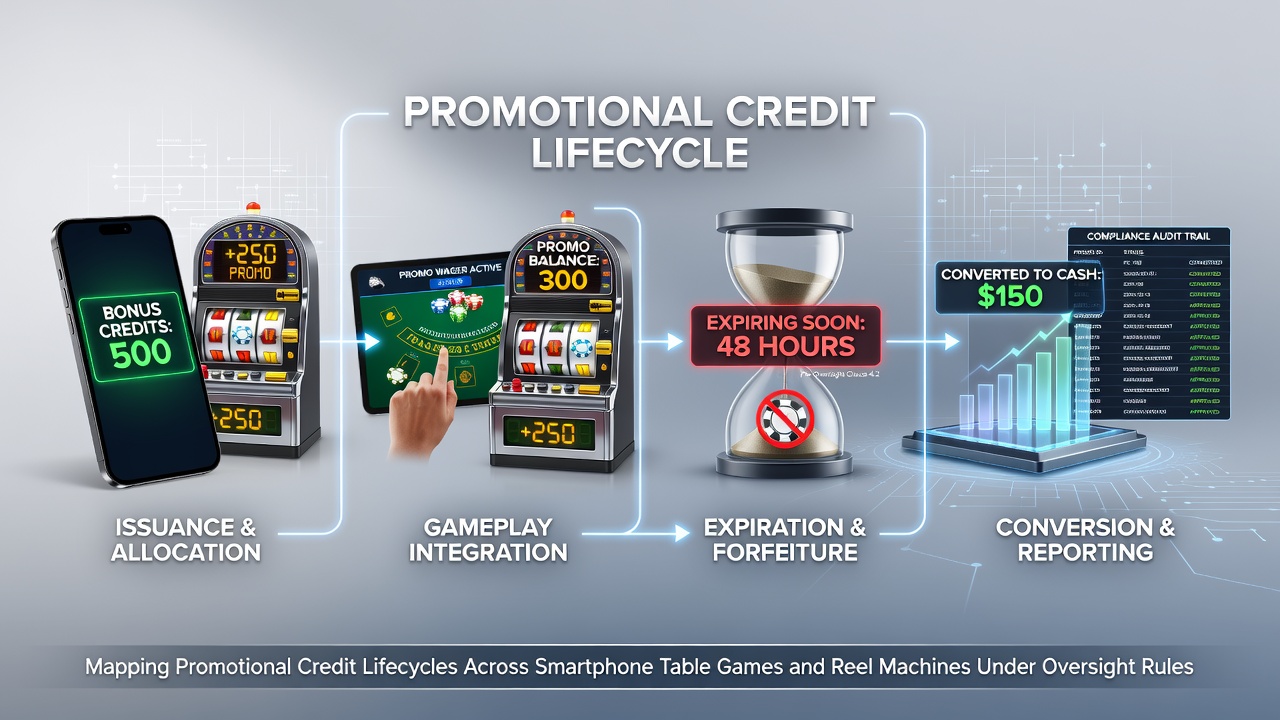
Promotional credits move through defined stages in both smartphone table games and reel machines, with each phase documented according to rules set by oversight bodies across multiple jurisdictions. Researchers tracking these cycles have mapped issuance, activation, usage, and expiry as distinct points where operators must record data for compliance verification.
Initial Issuance and Activation Protocols
Operators issue promotional credits through verified player accounts, and regulatory frameworks require immediate logging of the credit amount, source campaign, and eligibility criteria. In smartphone environments this process integrates with app-based wallets while reel machines often rely on printed vouchers or card-linked systems; both approaches demand timestamped records that auditors can access on demand. Data from the Nevada Gaming Control Board shows that activation windows typically span 24 to 72 hours depending on the jurisdiction and game type.
Once activated the credits enter a monitored usage period during which systems must distinguish between promotional and cash balances to prevent commingling. Smartphone table games update these distinctions in real time through backend ledgers, whereas reel machines process updates at the end of each session or shift. Compliance teams review these logs to confirm that credits apply only to permitted game categories listed in the original promotion terms.
Usage Tracking Across Game Categories
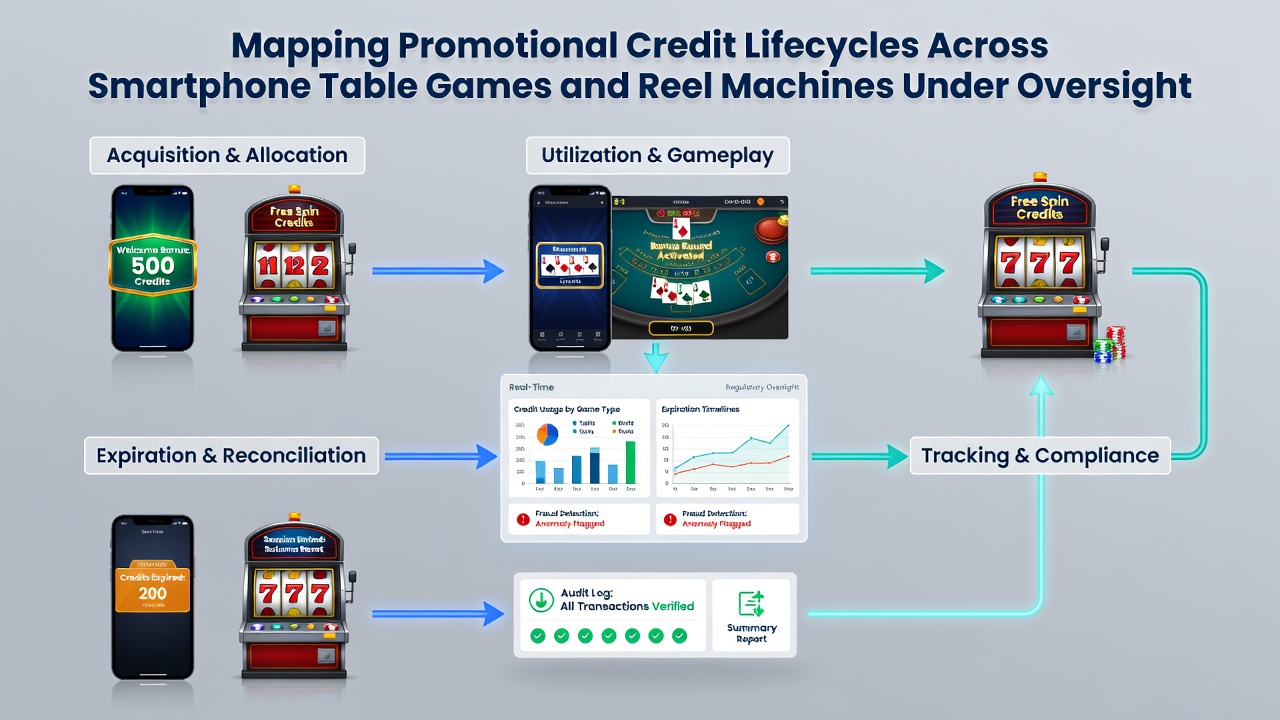
Smartphone table games and reel machines record credit consumption differently yet must satisfy the same overarching reporting standards. Table game sessions generate per-hand or per-round deductions that feed into centralized databases, allowing supervisors to trace individual credit units from initial balance to final outcome. Reel machines track credits through meter readings that capture coin-in, coin-out, and promotional-specific play, with data aggregated at set intervals.
Observers note that cross-platform operators often maintain unified tracking systems to reconcile mobile and land-based activity for the same player account. This unified view supports audit trails that regulators examine during routine inspections. In July 2026 several oversight bodies began requiring enhanced granularity in these reports, including separate fields for credit origin and game category, to improve visibility into redemption patterns.
Expiry, Forfeiture, and Reconciliation Processes
Promotional credits reach expiry according to schedules defined in the promotion rules, after which systems automatically remove unused balances and generate corresponding ledger entries. Smartphone platforms execute this removal through automated scripts that flag accounts for review, while reel machine systems mark vouchers as expired at physical terminals or central servers. Both methods produce reports that detail forfeited amounts and player notification records.
Reconciliation occurs at regular intervals when operators compare system-generated totals against player statements and promotional campaign records. Discrepancies trigger internal investigations and, when required, notifications to the relevant oversight authority. Industry reports compiled by the Australian Institute of Criminology highlight that consistent reconciliation practices reduce the incidence of unresolved credit disputes by measurable margins across sampled venues.
Cross-Jurisdictional Data Requirements
Regulatory frameworks in different regions impose varying levels of data retention and reporting frequency, yet all emphasize traceability from issuance to final disposition. Operators serving multiple markets must segment their databases to apply the strictest applicable rules to each player cohort. This segmentation ensures that promotional credits issued under one set of guidelines do not inadvertently violate standards in another jurisdiction.
Academic analyses from research institutions have examined how these segmented systems affect operational efficiency, noting that well-designed architectures allow real-time queries without compromising performance on either smartphone or reel platforms. The resulting datasets provide regulators with aggregated statistics on credit lifespans and redemption rates that inform future policy adjustments.
Conclusion
Mapping promotional credit lifecycles requires coordinated tracking across issuance, activation, usage, and expiry stages in both smartphone table games and reel machines. Oversight rules establish the documentation standards that operators follow, and compliance systems continue to evolve in response to updated guidelines such as those implemented in July 2026. These structured processes support consistent record-keeping that meets regulatory expectations while accommodating the distinct operational characteristics of mobile and physical gaming environments.