The Role of Session Controls in Directing Player Preferences Across Licensed Reel and Table Games
Carlo Zimmermann · Jul 15, 2026
The Role of Session Controls in Directing Player Preferences Across Licensed Reel and Table Games
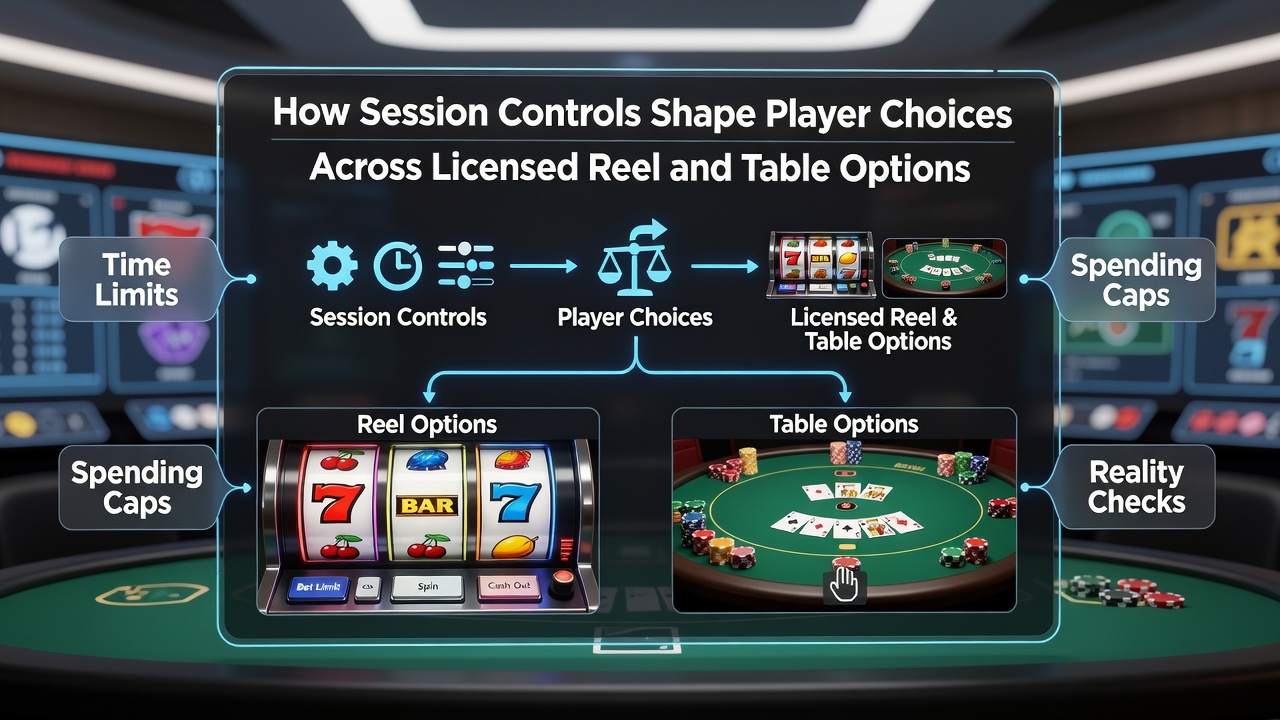
Session controls operate as built-in features within licensed gaming platforms, setting parameters around play duration, spending thresholds, and break reminders that directly influence how participants approach reel-based games and table options. These mechanisms appear in regulated environments across multiple jurisdictions, where operators integrate them to comply with oversight requirements while players encounter them during account setup or active sessions. Data from various regulatory reports shows that participants often adjust their game selections once these limits activate, with some shifting from high-volatility reels to steadier table formats or vice versa depending on remaining allowances. Observers note patterns where shorter session timers prompt quicker decisions on stake levels, whereas cumulative loss caps encourage exploration of lower-risk table variants like blackjack over extended reel sequences.Core Components of Session Controls in Licensed Settings
Session controls encompass several distinct tools, including mandatory reality checks that interrupt play at set intervals, deposit or loss ceilings applied per session, and optional time-based locks that prevent re-entry until a cooldown period elapses. Licensed operators deploy these across both reel and table offerings because regulatory frameworks require consistent application regardless of game category.
Research from the University of Nevada Las Vegas Center for Gaming Research indicates that players facing a 60-minute reality check frequently reduce reel spin frequency while increasing table hand selections, since table rounds allow more deliberate pacing within the same window. This adjustment occurs because table games often involve decision points that fit naturally into interrupted sessions, whereas continuous reel play can feel disrupted by the same prompts.
Influence on Reel Game Selections
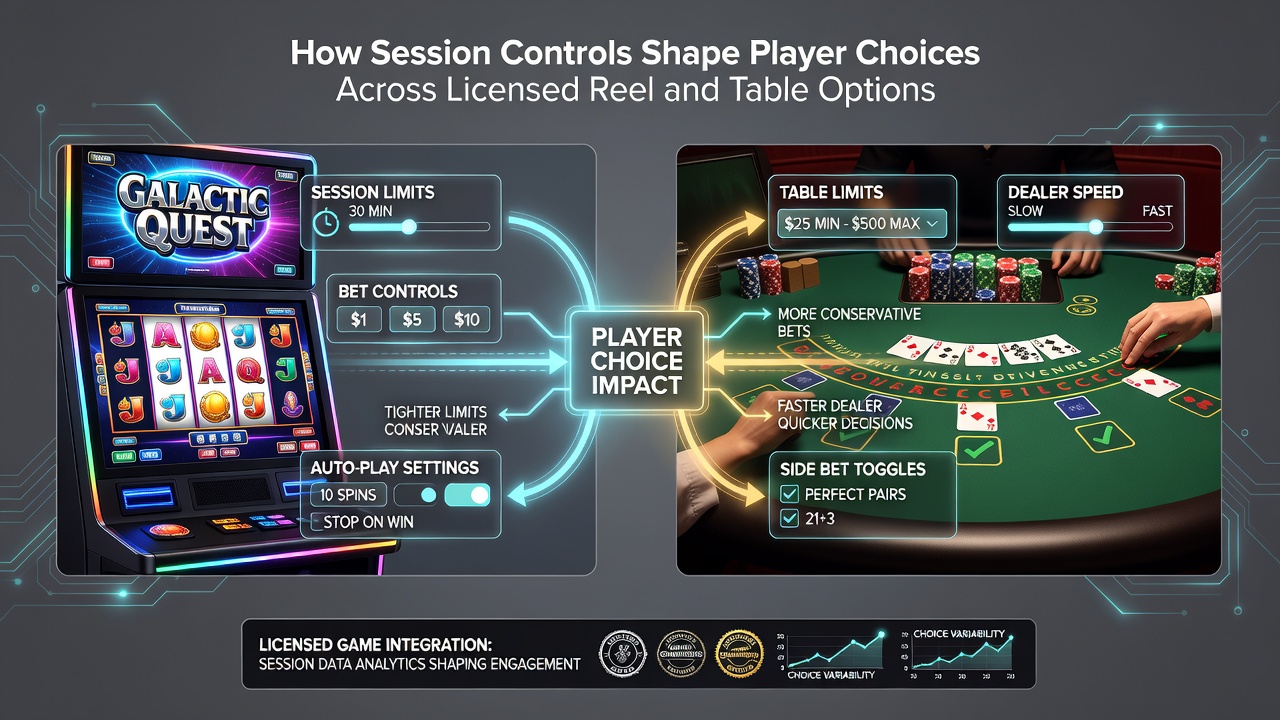
Reel options, commonly known as slots, respond noticeably to session boundaries because their mechanics rely on rapid, repeated spins that accumulate quickly toward any preset limit. When a loss threshold activates mid-session, participants documented in industry analyses tend to abandon high-denomination reel titles in favor of penny or multi-line variants that stretch remaining funds further.
Figures released by the Nevada Gaming Control Board reveal that reel engagement drops by measurable percentages once a 30-minute timer triggers, with players reallocating activity toward bonus-feature reels that offer perceived value within constrained timeframes. Those who study these systems find that the structure of reel mathematics interacts with controls to steer choices toward games with higher hit frequencies rather than progressive jackpot options that demand longer commitments.
Effects on Table Game Participation
Table games present different dynamics under the same controls because rounds unfold at variable speeds based on player decisions and dealer pacing. Session timers often lead participants to favor faster table formats such as speed blackjack or roulette over slower poker variants, since the former maximize hands completed before a break reminder appears.
Analyses conducted by the Australian Institute of Family Studies demonstrate that loss-limit features correlate with increased table game switching, as players move between variants to manage bankroll distribution across multiple options without exceeding caps. This behavior emerges because table environments allow strategic adjustments like altering bet sizes or opting for side bets, actions that provide perceived control within the boundaries set by session tools.
Observed Patterns Across Jurisdictions
Comparative data collected through 2025 and into mid-2026 shows consistent trends where session controls prompt diversification rather than abandonment of play altogether. In Canadian provincial frameworks, for instance, operators report elevated table game uptake following implementation of mandatory deposit limits, while reel volumes stabilize through strategic feature selection.
One documented case involved platforms adjusting interface prompts so that players approaching a time limit receive suggestions for table games with built-in pauses, resulting in measurable redistribution of activity. Those monitoring these shifts note that the effect strengthens when controls include customizable settings, allowing individuals to align limits with preferred game rhythms.
Developments Expected Around July 2026
Regulatory updates scheduled for rollout in several North American and European markets during July 2026 introduce enhanced session control interoperability across reel and table categories. These changes require operators to synchronize limit tracking so that activity in one game type automatically factors into overall session parameters, reducing opportunities for players to bypass thresholds by switching formats.
Industry reports project that such synchronization will further refine choice patterns, with data collection on player navigation between reels and tables becoming more granular. Existing studies already suggest that unified tracking leads to earlier recognition of spending patterns, prompting proactive game switches before limits fully engage.
Conclusion
Session controls function as structural elements that reshape how participants distribute their activity between licensed reel and table options, with evidence drawn from regulatory bodies and academic sources confirming measurable impacts on selection behavior. As frameworks evolve through 2026, these mechanisms continue to integrate more tightly with platform design, directing attention toward game types that accommodate the constraints while maintaining engagement levels across both categories.